
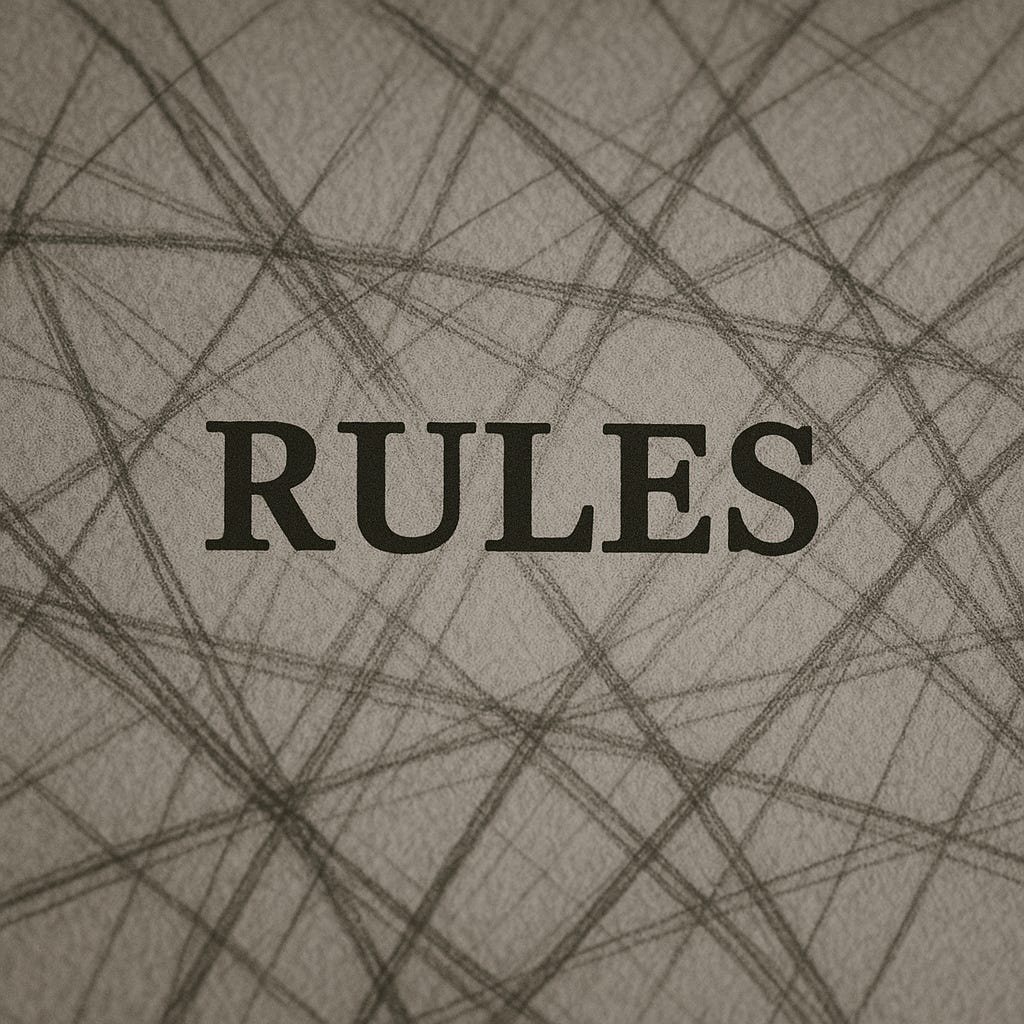
The word “rules” suggests order. It implies stability. It makes you believe the boundaries are fixed and the structure is clear.
They rarely are.
Laws, policies, contracts, and systems may look permanent. In reality, they are written in pencil. They can be amended. They can be twisted. They can be erased and replaced altogether. The ability to change them requires power. Not always wealth. Sometimes it is access. Sometimes it is reputation. Sometimes it is technical knowledge or the patience to navigate the tangled process.
The fine print hides the reality. Consider how credit card companies offer zero percent interest financing. It sounds generous. Hidden in the details is a quiet trap. Miss a payment or fail to pay off the balance within a set period, and they apply high interest retroactively to the entire amount. The rule sounds consumer-friendly. The advantage belongs to the company.
I have seen the same pattern in my legal work. Settlement offers often arrive with headline numbers that seem favorable. Yet buried in the carve-outs and technical language are restrictions that dramatically reduce the real payout. Most people never notice them until it is too late. My job is to find those carve-outs and strategize how to minimize or eliminate them. That is my training. Most people never get that opportunity.
The same quiet edits happen everywhere. Tax codes rewritten to benefit the well-connected. Regulatory rules passed with hidden exemptions. Public benefits eroded by buried conditions. On the surface, the rules seem clear. Beneath, they are as tangled as the lines that shape the world around them.
The only way to avoid being caught off guard is to question what looks stable. Before you accept a rule, policy, or offer at face value, ask two questions:
Who quietly benefits if I accept this as written?
What happens if I fall just outside the ideal conditions?
The rulebook never stops changing. The people prepared to question it are the only ones who stand a chance of keeping up.