
I. The Illusion of Absence
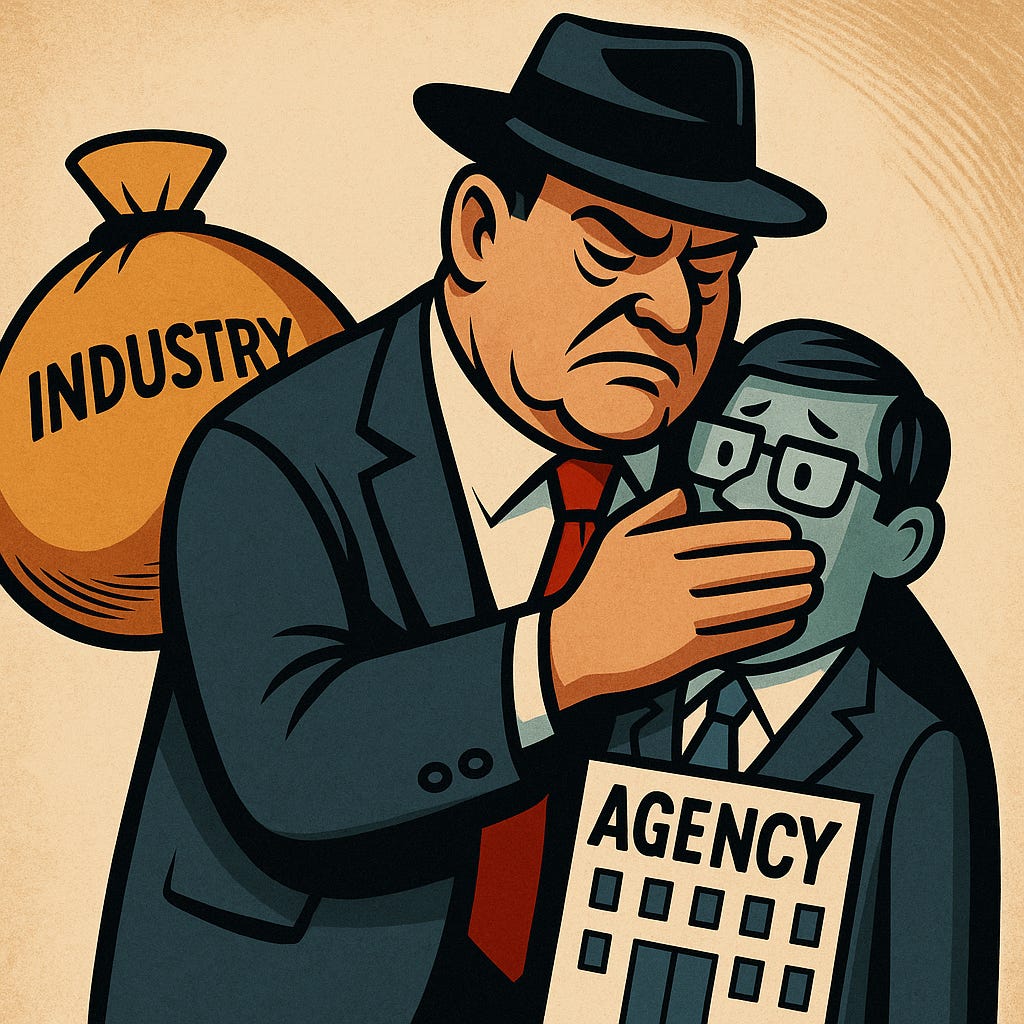
Silence is often mistaken for restraint. We are taught to see it as respectful, professional, even neutral. In complex systems, however, silence is not the absence of power. It is one of its most reliable tools.
In governance, silence is never empty. It functions as a lever. A delay in regulation. A footnote in a budget. A rule that quietly vanishes without explanation. These are not random gaps. They are structured forms of inaction that shift consequences away from those with power and onto those without it.
Many make the mistake of assuming that only loud actors drive outcomes. The savviest power players, however, do not always need to shout. They only need to know where the lights are off and who is not paying attention.
Silence, in this context, is not a blank page but invisible ink. What is hidden is not nothing. It is merely waiting for those who know how to read it.
II. Proof in the Gaps
Let us examine three core forms of systemic silence: regulatory delay, budget silence, and regulatory rollback. Each operates differently, but the beneficiaries are often the same.
Regulatory Delay
The rule exists, but enforcement never arrives.
The FDA has long acknowledged the need to modernize its sunscreen regulations. American consumers still rely on ingredients and testing protocols that lag behind those used in Europe and Asia. But despite clear public health stakes, new regulations have been stuck in limbo.
Why? Because delay favors incumbent manufacturers. Every year without updated standards allows legacy brands to avoid costly re-formulation or re-testing. It also slows the introduction of safer, more effective alternatives that could disrupt the market.
This is not just bureaucratic sluggishness. It is structural convenience. The delay shields entrenched players from disruption while appearing outwardly harmless to the public.
Those closest to the agency understand the tempo. The rest of us are left standing at a green light that never turns.
Budget Silence
The rule remains on paper, but funding quietly disappears.
In 2025, the U.S. Government Accountability Office reported that the FDA had not been conducting enough food safety inspections, citing weak oversight, unaddressed staffing shortages, and underutilized resources. The problem was not that food safety laws were repealed. It was that key enforcement efforts were left to wither.
There was no high-profile hearing. No scandalous press conference. Just a persistent erosion of capacity.
Who benefits? Large agribusiness firms that view surprise inspections, sanitation upgrades, or stricter compliance rules as threats to operating margins. Quietly starving oversight allows industry players to avoid constraints while projecting normalcy.
The rulebook is still there. The referee just cannot afford to show up.
Regulatory Rollback by Design
The rule is not delayed. It is erased, but in a way few notice.
President Trump’s Executive Order 13771 introduced a “2-for-1” rule: for every new regulation introduced, two must be eliminated. Framed as a win for small business, the rule sparked an aggressive rollback of protective policies, especially those without strong industry backing.
The silence was not in the announcement. It was in the consequences. Smaller rules that protected workers, consumers, or marginal industries quietly vanished.
Who benefits? Large firms with legal and lobbying teams that track changes in real time. They know which regulations are expendable and which are quietly vulnerable. They adapt faster than any watchdog.
For the rest of us, the rules are simply gone, and we do not know until it is too late.
III. Seeing the Shadows
How can institutional silence be recognized before it harms you? Start by watching for these signals. Each one is a shadow cast by a rule that no longer wishes to be seen.
Delayed Implementation
When a law passes but rollout deadlines are vague or postponed, ask who benefits from the pause. In many cases, early movers have already secured contracts, licensing, or waivers while the public is told to wait.
Budget Anomalies
A program promoted through strong public messaging but backed by weak funding is a red flag. Shrinking line items in the final budget signal quiet resistance from those with fiscal leverage.
Vanishing Mentions
If a longstanding regulation disappears from agency updates or press cycles, examine the industries it once constrained. The removal of attention often stands in for the removal of oversight.
Trade Group Cheerleading
When an industry coalition loudly supports a public interest rule, do not assume genuine alignment. Strong public endorsement usually follows a pre-negotiated outcome that serves their interests first.
IV. Turning Absence Into Access
Most people assume silence is a dead end. For those who learn to interpret it, silence becomes a map.
Here are four ways to engage with institutional silence. Each can help you protect yourself or adjust your strategy.
Ask Uncomfortable Questions
When something feels too quiet, ask why. What is not being enforced? Who benefits from that absence? These questions often reveal hidden sources of influence.
Monitor the Gaps
Watch regulatory calendars. If rules are delayed repeatedly or removed from agency bulletins, take note of which industries continue to advance. This is not abstract. It is a repeatable pattern.
Track Influence, Not Just Speech
Lobbying disclosures, public comment filings, and fiscal reallocations offer clearer insight than most press conferences. These sources show where decisions were shaped before the public started paying attention.
Apply the Silence Framework Across Sectors
In local government, hospitals, universities, and school boards, silence operates in similar ways. A delayed policy, a frozen hiring line, or a cancelled grant is a signal. Focus on who continues to move forward without explanation. Those individuals understand the gaps and know how to use them.
Final Reflection
This is not a call to cynicism. It is a commitment to clarity.
The system rarely requires conspiracies when it is built on quiet mechanics. Silence does not provoke resistance. It creates deniability. It protects those who understand its language.
No single reform will undo this. Even so, there is power in learning to perceive it.
Once you recognize that silence is not absence but design, you stop waiting for explanations that were never intended to arrive. You begin to see who advances quietly, untouched by scrutiny.
At that point, the question is no longer what the system is hiding. The question is whether you choose to remain a spectator or move forward, informed and prepared.
Sources
Haley Westman, “Is the FDA’s Approach to Sunscreen Regulation Failing Consumers?”
Seattle University Law Review
https://digitalcommons.law.seattleu.edu/cgi/viewcontent.cgi?article=2811&context=sulrU.S. Government Accountability Office. “FDA Should Strengthen Inspection Efforts to Protect the U.S. Food Supply.” GAO-25-107571.
https://www.gao.gov/products/gao-25-107571Bridget C.E. Dooling, Mark Febrizio, Daniel R. Pérez. “Accounting for Regulatory Reform under EO 13771.”
George Washington Regulatory Studies Center
https://regulatorystudies.columbian.gwu.edu/president-trumps-regulatory-executive-orders