
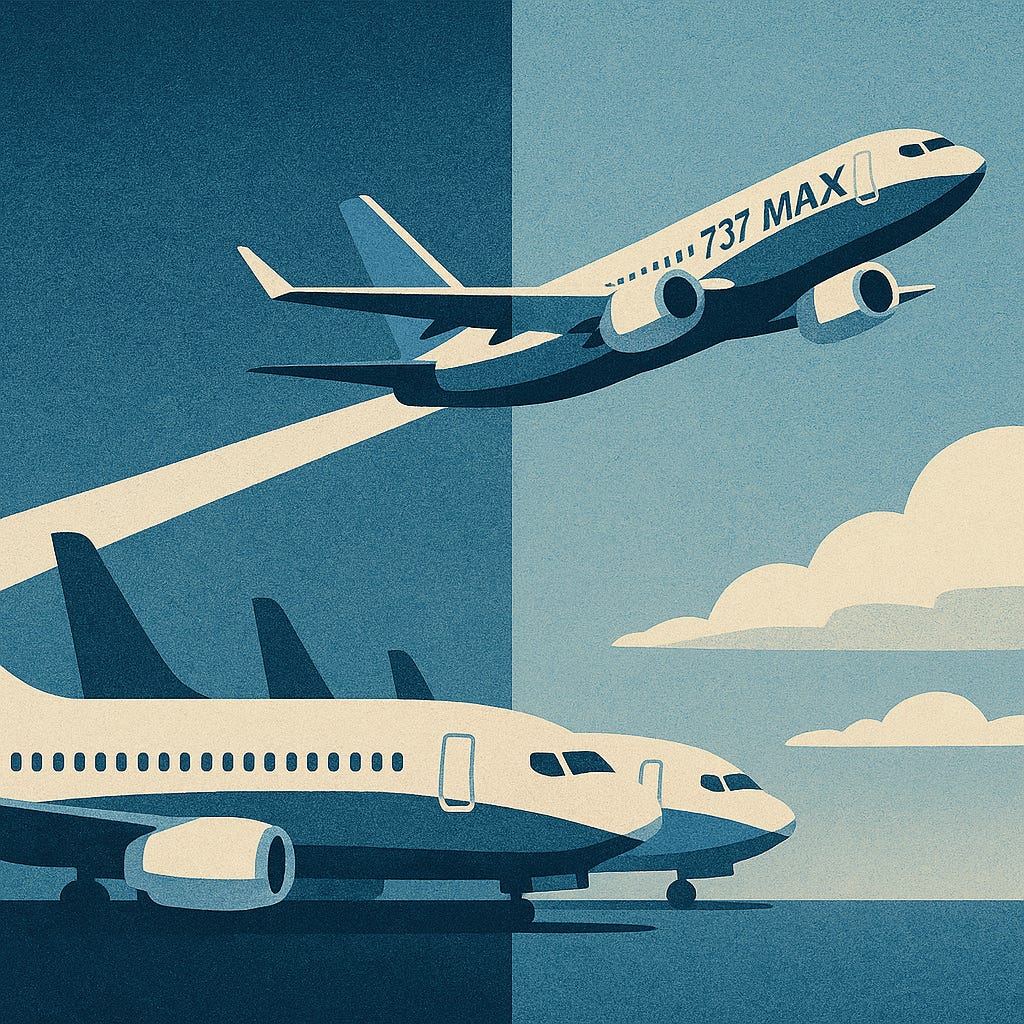
The first grounding order came before dawn in Washington.
China moved first. Then Indonesia. Then Singapore, Australia, and the European Union.
Two crashes. Five months apart. Hundreds dead.
By the time the sun touched the Potomac, the world had already begun to split in two. In one half, the Boeing 737 MAX sat motionless on tarmacs. In the other, it still carved white lines across the horizon.
Inside the FAA’s headquarters, the phones rang without pause. The public statement was short: We are reviewing data.
That sentence was not an empty formality. It was a move. Stillness can be the most strategic form of motion. When designed well, it creates the illusion of waiting while every hour is used to reposition the center of power. The public sees delay. Insiders see a shield.
The same patterns repeat across crises. The glass wall remains, keeping the public in view but out of reach. The rulebook bends in real time. Silence functions as an operating system.
I. The Logic of the Hold
From the outside, a pause looks like uncertainty. From the inside, it can be the most controlled form of power. When you hold the clock, you can compel outer layers to absorb the first wave of impact. This grants the core space to recalibrate in private.
Every day the 737 MAX continued to fly was another day to finalize software fixes, align messaging, and maintain an optics of composure. Foreign regulators handled cameras. U.S. airlines faced passengers. At the center, decision-makers held time in their hands.
II. How the Hold Was Built
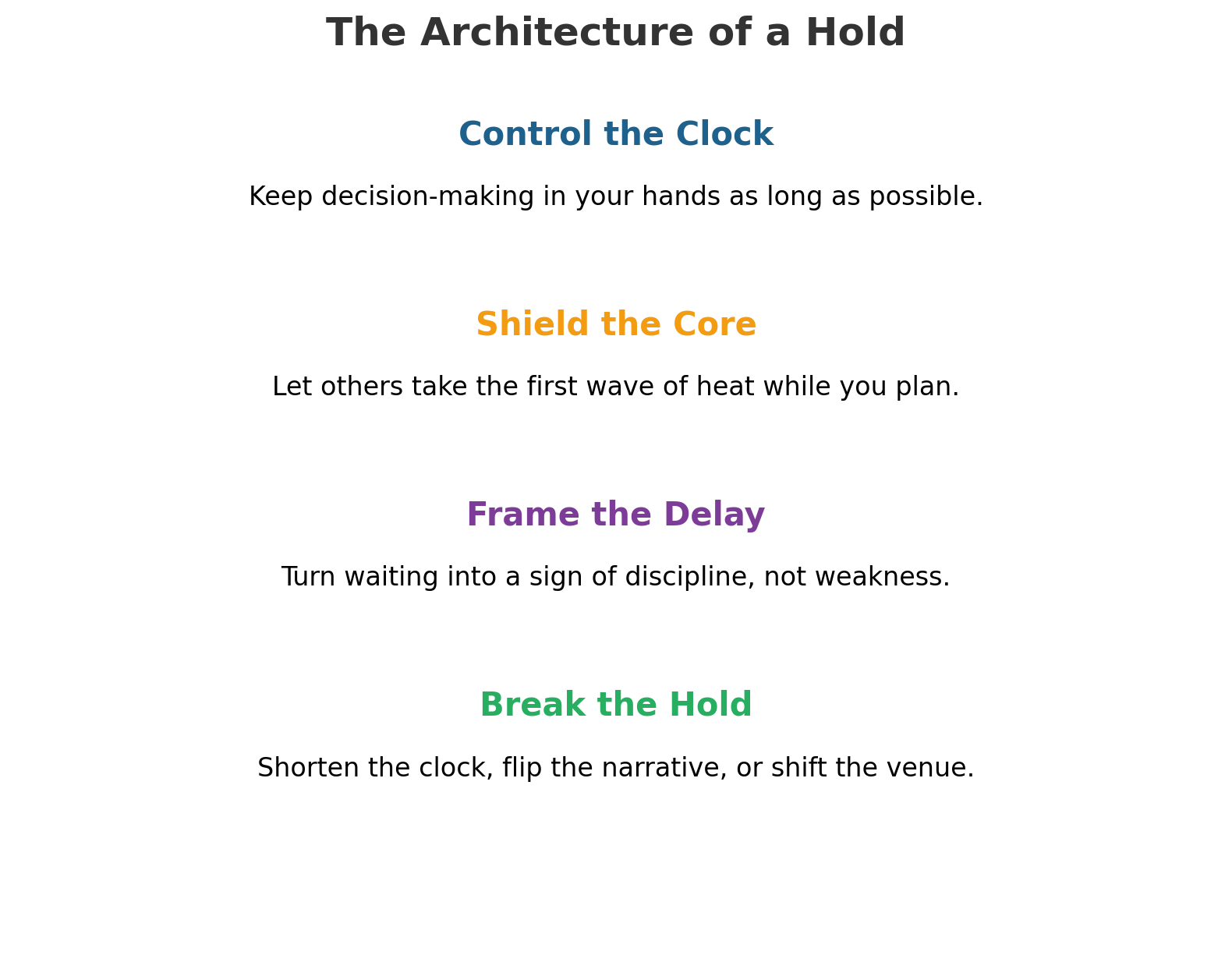
The strategy rested on three pillars:
1. Possession of the Clock
Only the FAA could ground the planes in U.S. airspace. Until then, the fleet kept flying.
2. Shielding the Core
Foreign regulators acted first. U.S. airlines took heat. The FAA stayed insulated.
3. Framing the Delay
Waiting was presented as discipline. The refrain was “more data.”
III. The Break in the Sky
No hold lasts forever. This one began to fracture immediately after it was built.
Each international grounding increased pressure on the U.S. The narrative shifted from caution to deference. Families of victims repositioned urgency in Congress. By the time lawmakers signaled readiness to act, the FAA had lost control over timing. The planes were grounded, but on someone else’s clock.
IV. How to Read a Hold in Progress
If you are outside the center:
Accelerate the clock. Add credible pressure every day.
Reverse the frame. Make delay look reckless rather than prudent.
Change the venue. Move the decision to a forum beyond stall control.
If you are inside the center:
Control the tempo. Silence without framing is surrender.
Stage diversions. Show enough activity to conceal the pause.
Protect the perimeter. Neutralize authorities who can override you.
These are not abstract strategies. They are real moves in boardrooms, courtrooms, and crisis rooms.
V. Why It Matters Beyond Boeing
Without this lens, a pause can seem like a gift of time. You might build your case, gather allies, and prepare evidence, only to find the decision was made long before you entered the room.
The structure of a hold repeats across institutions:
Corporate boards delay reports until after a shareholder vote. Political parties schedule contests far in the future. Nonprofits wait to announce cuts until after fundraising ends.
The architecture remains the same:
Own the clock.
Shield the core.
Frame the delay.
If those three conditions hold, the center decides when the sky changes.
The FAA eventually grounded the MAX. But it was no longer choosing the moment. Boeing and the FAA failed because they let others take control of their clock. The power of a hold lies in its timing, and once you lose that, the tactic collapses. Learn to spot a hold early and you can force it to break. Learn to build one well and you can decide exactly when the sky changes.
If this helped you see the system with sharper eyes, consider subscribing. Each piece offers grounded analysis of how power operates, how rules bend, and how clarity becomes leverage. Understanding the system is not optional. It is an advantage worth cultivating.
Sources
Axios: All the countries that have suspended the Boeing 737 MAX
https://www.axios.com/2019/03/12/boeing-737-max-banHarvard Law School Forum on Corporate Governance: Boeing and the 737 MAX: Lessons for Corporate Boards
https://corpgov.law.harvard.edu/2024/06/06/boeing-737-max/Wired: The FAA’s Ties to Boeing Under Scrutiny After Second Crash
https://www.wired.com/story/boeing-737-max-8-ethiopia-crash-faa-ground-safety/AP News: As Boeing turbulence persists: A look at past crashes …
https://apnews.com/article/f73fb7b9eaff7f6549c88e958f7b8b38Time: How the Boeing Saga Put a Harsh Spotlight on the FAA
https://time.com/5551326/boeing-plane-crashes-faa/France 24: FAA joins global groundings on March 13, 2019
https://www.france24.com/en/20190313-aviation-usa-boeing-737-max-plane-crash-trumpPBS NewsHour: Two deadly crashes raise questions about FAA’s close ties to Boeing
https://www.pbs.org/newshour/nation/2-deadly-crashes-raise-questions-about-faas-close-ties-to-boeing